


PSB Pre-Senior Baccalaureate
Admissions
A 21st Century Education
At Amesbury, we prepare our children not just to pass the next exam but to thrive at the next stage of their education with the independence, resilience and have-a-go spirit that characterises the school.
Across the curriculum, and particularly in Key Stage 3 Years 7 & 8, we follow the Pre-Senior Baccalaureate (PSB), a “modern assessment framework that develops the values, skills, attitudes and behaviours pupils need to flourish in an ever-changing world.”
The PSB is overseen by the Learning Skills Trust, a registered charity that provides skills frameworks for junior and senior schools, from Reception to Year 8, and now supports Years 9–11 through the Skills Development Framework (SDF).
Alongside academic knowledge, the PSB places strong emphasis on life-long skills: developing flexible and adaptable intelligence; bridging skills gaps that traditionally sit outside content-heavy curricula; encouraging pupils to apply their learning independently; promoting excellent communication; challenging outdated perceptions of what school is for; inspiring a genuine love of learning; and ensuring collaboration and teamwork sit at the heart of the classroom experience.
Why PSB? Pre-Senior Baccalaureate
· The PSB ethos aligns philosophically with Amesbury’s: a programme of study that prepares children academically, personally, socially, culturally and spiritually by actively developing and tracking knowledge alongside explicitly taught and referenced skills and attitudes.
· It is recognised, modern and collaborative: there are 40+ junior and prep schools in the PSB network, promoting consistency in what and how pupils study before they move on to senior schools.
· Senior school alignment: 50+ senior schools accept the PSB certificate for 11+/13+ entry alongside their own assessments or core ISEB examinations.

What are the PSB Core Skills?
Underpinning teaching and learning at Amesbury (and informing our reward system) are the six PSB Core Skills:
1. Leadership
2. Collaboration
3. Independence
4. Thinking & Learning
5. Review & Improvement
6. Communication
We also add a seventh: Community, because kindness, compassion and belonging are essential to becoming a successful learner.
These skills are explicitly taught, modelled, practised and reviewed across subjects and co-curricular life, so pupils learn how they learn, not just what they know.
We design learning so that pupils experience:
· A sense of purpose
· Flow (deep engagement)
· Autonomy and personal responsibility
· Resilience and a growth mindset
What does this look like in the classroom?
Agency, independence and open-ended tasks
Teachers have the scope to design curriculum content that goes beyond ‘just learning stuff’, giving pupils real choices, open-ended strategies and a wide range of assessment methods.
Visible skills embedded into classroom learning
Pupils share a consistent language that makes the skills and attitudes behind effective learning visible and easy to discuss. Lessons highlight and celebrate the specific skill focus (e.g. Collaboration or Review & Improvement) so pupils can practise, self-evaluate and improve them.
Stretch and scaffold
The framework provides the right level of stretch for pupils who are ready to extend their thinking, while ensuring every child can show what they can do, not merely what they can revise or remember for a test. The varied assessment tasks across the Amesbury curriculum ensure that every pupil has opportunities to succeed and flourish.
The Amesbury Award
Although not formally assessed, our unique Amesbury Award further strengthens and applies the PSB core skills through meaningful, real-world experiences. It embodies our approach to character education, ensuring that the PSB core skills developed in the classroom transfer seamlessly into wider life and back again.
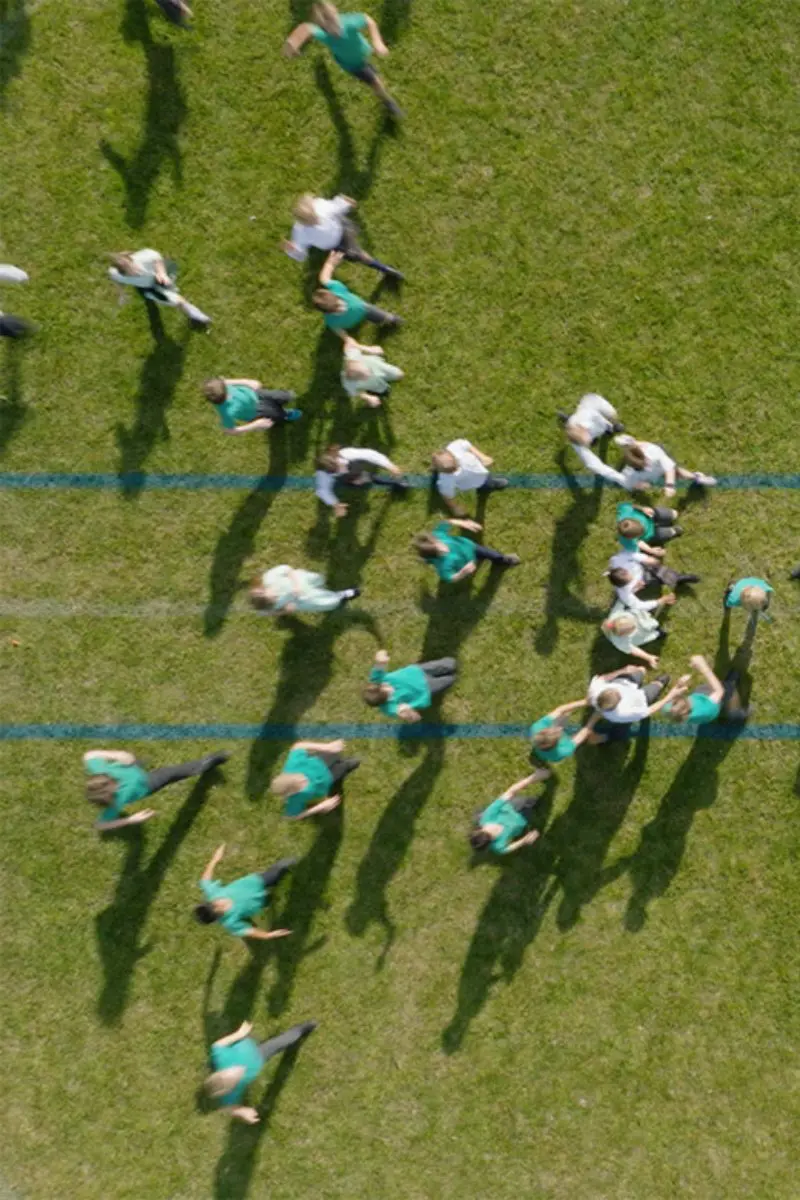
Every child takes part in curriculum-based teambuilding, developing foundational collaboration, leadership, independence and communication skills. Practised termly in all weathers – sun, rain and mud – these experiences feed directly back into classroom learning, exemplifying what the PSB describes as ‘education, the way it should be’.
What about assessment?
Pupil progress is captured through a balanced blend of projects, presentations, practical activities and formal assessments across a broad academic curriculum (including English, Maths, Science, Languages, Humanities, Performing Arts and Sport). Core-skill development is tracked alongside academic attainment to give a full, nuanced picture of progress.
Learning can be a messy, non-linear process so PSB ongoing assessment happens across the academic year with strong guidance and opportunities for self-reflection to build confidence and consolidate learning in a range of different contexts.
The PSPQ (Pre-Senior Project Qualification)
In Year 8, every pupil, supported by a designated staff mentor, completes the Pre-Senior Project Qualification (PSPQ), an independently designed and led project.
Pupils begin by setting their own research question and designing a method for exploring it. They then present their findings formally to teachers, parents and visiting senior schools. As part of their final phase of learning at Amesbury, it stands as a powerful showcase and celebration of their scholarship, curiosity and ability to communicate with clarity and confidence.